


Surrealism Art Analysis and Comparison
$10.00
(No reviews yet)

Write a Review
Surrealism Art Analysis and Comparison
Surrealism Artwork Analysis & Comparison Task
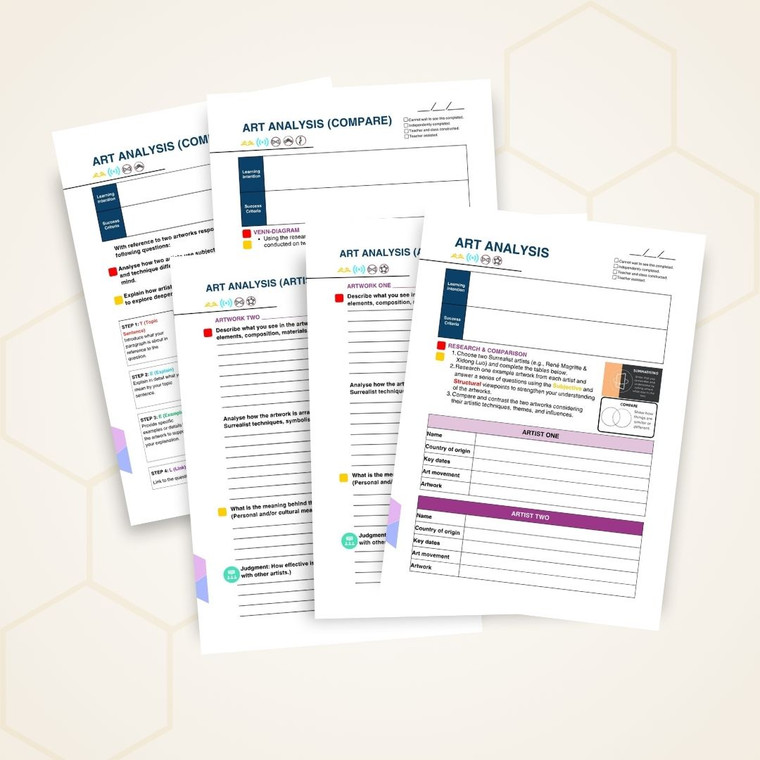
Develop students’ ability to analyse, compare and interpret Surrealist artworks with this comprehensive five-page artwork analysis and comparison resource.
Students select two Surrealist artists and investigate one artwork from each artist. Through scaffolded questions, students examine the artworks using the Structural and Subjective Viewpoints, while considering the Artworld Concept - Audience and how different viewers may interpret and respond to Surrealist imagery.
The resource guides students step-by-step through individual artwork analysis before asking them to identify similarities and differences between the two works. A Venn diagram provides a visual framework for comparing artistic techniques, subject matter, themes, symbolism and influences.
Students progressively develop their written responses, moving from research and comprehension → artwork analysis → comparison → extended writing.
What's Included:
- 5-page student worksheet
- Research and comparison activities for two Surrealist artists
- Scaffolded questions for analysing individual artworks
- Structural Viewpoint analysis
- Subjective Viewpoint analysis
- Artworld Concept: Audience
- Guided artwork comparison activities
- Venn diagram for identifying similarities and differences
- Super 6 comprehension strategies:
- Summarising
- Questioning
- Explicit practice of NESA verbs:
- Describe
- Explain
- Analyse
- Compare
- Scaffolded TEEL paragraph writing
- Student choice of TEEL response question
Perfect for: a Stage 5 Surrealism unit, artist comparison, critical study, assessment preparation. The scaffold provides students with a clear pathway from research and visual analysis to comparative thinking and structured extended writing, helping them build confidence in responding to artworks using Visual Arts terminology and NESA verbs.


